


CELEBRATE CHINESE VALENTINE'S DAY
Chinese Valentine’s Day is fast approaching, so you have gift-giving on the mind. And if you are lucky, even somebody asking what you would like. Or this is your first time celebrating (or even hearing about) Chinese Valentine’s Day.
Whether you are a seasoned celebrator or just dipping your toe into this year’s summery festival of love, we have you covered. Here you will find an overview of the history and background of Chinese Valentine’s Day (which is called Qixi Festival) and traditional ways to mark the occasion.
We also share some of our favourite Chinese Valentine’s Day gift ideas for everyone special in your life – including yourself!
What is Chinese Valentine's Day?
What we might consider the Chinese equivalent of Valentine’s Day is called The Qixi Festival, or the Qiqiao Festival. It gets its name from its place on the calendar: on the seventh day of the seventh lunar month (in Chinese, qi means 'seven(th)', xi means 'sunset(s)', and jie means 'festival').
It began over 2,000 years ago and remains an opportunity to celebrate love across China and beyond. It is especially popular in east Asian countries like Japan, Korea, and Vietnam, but it is increasingly celebrated here in Europe, too.
Chinese Valentine's Day
Why not embrace this love-filled festival and surprise your loved ones with a great gift?

Limited Edition: Qixi L'Absolu Rouge Drama Matte lipstick
What better way to mark the occasion than with a stunning lipstick in one of three iconic shades – and each encased within an exclusive Qixi-inspired design?
These lipsticks are as beautiful on the outside as the our beloved matte formulas they contain, with unique, limited-edition cases that commemorate the most romantic moment in Chinese mythology with elegant imagery inspired by two dancing butterfly lovers.
Nail your date-night look or surprise somebody with an irreplaceable gift by getting your hands on a limited edition L’Absolu Rouge Drama Matte lipstick. Whoever you are buying for, you can find their perfect shade from the three available:
196 French Touch, the forever-trendy carrot red
All-new 200 French Drama, a lively and earthy burgundy nude
All new 292 Overdramatic, a beautiful rose nude hue

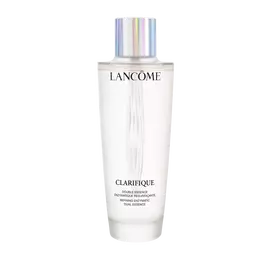
Lancôme’s Clarifique collection
Let your loved one channel the radiance of the sought-after stars and the moonlight that women threaded by with this brightening skincare range. These products have been formulated with French Beech Bud Extract for smoother looking skin, visible radiance, and refined skin texture.
The range includes:
Clarifique Cleansing Foam
Clarifique Watery Emulsion
Clarifique Milky Cream
Clarifique Duel Defense
So, there is something for everyone you are shopping for this Chinese Valentine’s Day! Or go all in and buy the complete set – you know there is someone who deserves it.

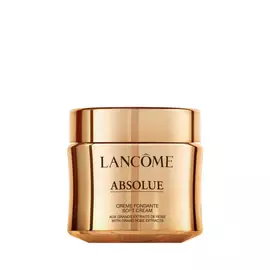
Absolue Soft Cream
Make someone’s Chinese Valentine’s Day truly special with this our brand-new transformative iconic formulation from Lancôme, part of the ever-popular Absolue skincare range.
It is the perfect nod to the tried and tested tradition of giving roses on Valentine’s Day, but it lasts far longer (and so do its benefits!) and is – if you ask us – much more enjoyable and useful than a bunch of flowers. Lancôme’s Absolue range channels the rose in all its glory, with Grand Rose Extracts enriched with Lancôme Rose, Rose Damascena and Centifolia Rose.
And now this new, luxuriously soft cream can give you or your loved ones the feeling of softer, more supple skin. And with a gorgeous scent to really indulge the senses!

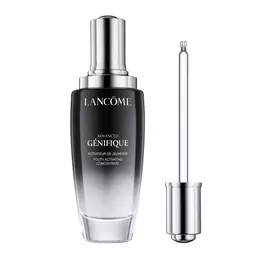
Advanced Génifique Serum
Lancôme's number one serum – it has received 15,000 five-star reviews for a reason! And as it is designed for people of all ages, ethnicities, and skin types (including sensitive skin), it is a crowd-pleaser for everyone you want to treat this Chinese Valentine’s Day.
Inspired by microbiome science, our iconic serum helps strengthen the skin barrier. It contains 7 prebiotic and probiotic derived extracts, as well as hyaluronic acid and Vitamin CG.
The result? Visibly younger, more radiant skin. What better gift could you give? Enjoy a product that targets:
Radiance – Fine lines – Wrinkles – Pores – Evenness – Smoothness – Firmness
then this might be the perfect Chinese Valentine’s Day gift.

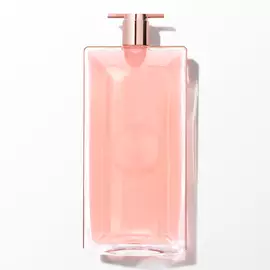
Idôle Eau de Parfum
If you are in the market for a truly iconic Chinese Valentine’s Day gift, then Idôle is a brilliant bet.
Do you have women in your life who dare to dream? To defy expectations? Do you know strong, outspoken, empowered women? Women who need look no further than themselves for inspiration? Idôle is the ideal signature scent for the powerful and inspiring idols who are shaping the world, and Chinese Valentine’s Day is a great occasion to honour them.
With olfactory notes of rose, jasmine and chypre, it is as unmistakable and intoxicating as these dazzling women themselves.

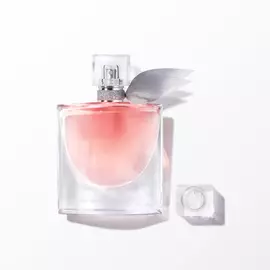
La Vie est Belle Eau de Parfum
Another wonderful Chinese Valentine’s Day present for the perfume lovers is Lancôme’s hugely popular La Vie est Belle. The first tasty Iris created especially for Lancôme by three of the most celebrated perfumers in France, it is as complex, unique, and varied as the women who wear it. Balancing the nobility of Iris with the depth of Patchouli and an alluring Vanilla accord, it leaves a lasting, joyous impression.
Plus, it has been reinvented to offer sustainable luxury. Your loved ones will be able to refill the iconic bottle repeatedly after they are inevitably hooked.
Celebrate love this Chinese Valentine’s Day
There is a lot going on in the world – good and bad. We should all embrace any opportunity to celebrate the power of love in all its forms and let the special people in our lives know how much they mean to us. And do not forget one of the most important forms of love – and one that many of us neglect: self-love. Whether you have a big date, a pamper session with the girls, or you just fancy having an indulgent evening to yourself or trying out a new signature scent, this is a great excuse to treat yourself. Especially with discounts across iconic Lancôme products!
BESTSELLER
Old price €290.00 New price €232.00
BESTSELLER
Old price €165.00 New price €132.00
BESTSELLER
from €72.00 €57.60
BESTSELLER
from €34.00 €27.20
